Aprilluck Sports Apparel Manufacturing Insights
The sports apparel manufacturing industry is full of challenges and opportunities, and we at Aprilluck are well aware of the ups and downs of the entrepreneurial journey. We have witnessed the growth of numerous brands and also seen some brands disappear. Based on our experience, we have summarized several common pitfalls, hoping to help newcomers and brands entering this industry to avoid these traps.
Sports apparel manufacturers dislike taking such orders because: we have accompanied many brands, some of which grew from the initial 30 pieces to 5,000 pieces, while others gradually disappeared. We have summarized these minefields that everyone should avoid stepping on:
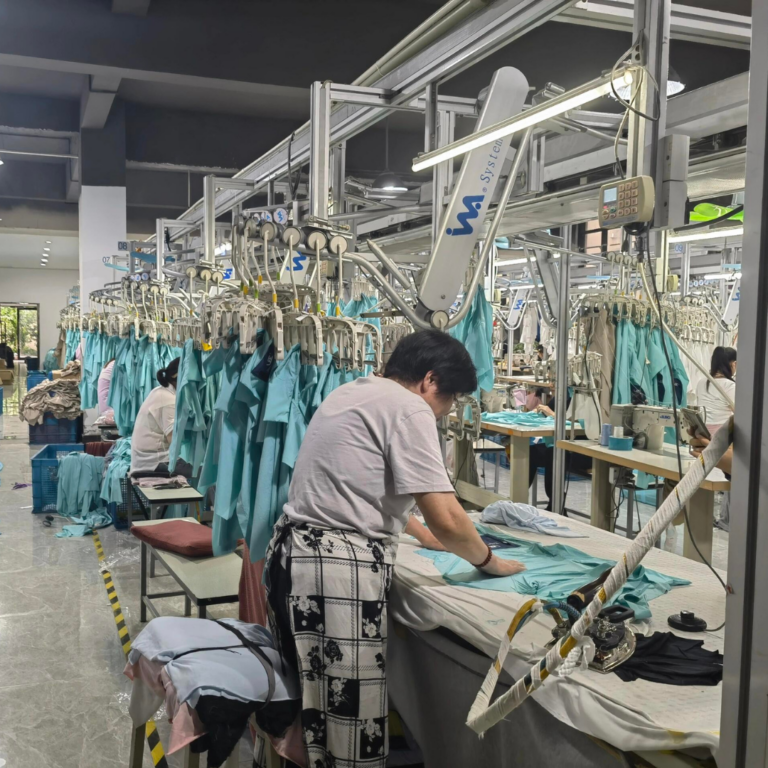
- Lack of understanding of clothing development and production: Assuming that making clothing is as simple as sewing a few pieces of fabric together. In reality, the process of clothing development and production is very detailed and cumbersome, with risks at every turn. We offer a full package of services, from material sourcing to production, with dedicated personnel following up on each step, and we handle many small issues ourselves. The client only needs to inspect the final product. If you were to manage it alone, dealing with fabrics, patterns, craftsmanship, accessories, finishing, etc., any problem in any link could result in huge losses in mass production!For those doing their own brand and OEM production, pay special attention to the following: There are many types of garment factories, and they are very detailed, such as knitting factories, sweater factories, woven factories, etc.!!! If you are new to the industry, take my advice, it’s not recommended to do it yourself. Wasting time and energy inside, the product cost does not have an advantage. It’s more efficient to do professional things by finding professional people, including design development, sample making, and mass production, all of which can be fully covered by one factory!!! Factories usually have a minimum order quantity requirement, and very few take orders of just a few dozen pieces, but there are still people willing to take them. So, new apparel entrepreneurs should look for processing factories willing to cooperate, as a small purchase quantity will inevitably lead to higher labor costs. A friendly reminder: If you are cooperating with a factory just to get a cheaper price but don’t have a large order volume, it’s advised not to look for manufacturers but wholesalers!!! Looking for factories is time-consuming and laborious, and without a large quantity, the price may not necessarily be cheaper than wholesalers.
- Insufficient preparation for entrepreneurship:
(1) No thorough market research: Took over a dozen styles at once for development, claiming to test the market, but in the end, only one or two styles were produced in large quantities. Development is very energy-consuming for factories and also very costly for clients. Blind development is detrimental to both the factory and the brand.
(2) Lack of stress and risk tolerance. A new store made a batch of goods that couldn’t be sold, and either the capital chain broke or the mentality collapsed. Those who can’t withstand the pressure are advised not to engage in the apparel business. Now, the return rate for clothing is 30%-80%, and having inventory is inevitable for clothing businesses. If you opt for a purely pre-sale model, unless the style is competitive enough and you have your own IP, and your brand is influential enough, who would wait for a pre-sale from a new store?
(3) Lack of clear planning for your own brand: Not knowing the target consumer group, age layer, style, spending power, or habits. The brand’s clothing style is unstable, with each new release differing in tone, as if pieced together.
(4) Unclear pricing and cost control. For example: pursuing high-quality during development to match the brands you wear (sports tops over $100) only to find the cost too high, then realizing that it’s difficult for a new brand to set high prices and wanting to start over. There is a certain gap between reality and ideals.
(5) No planning for new releases Experienced clothing professional will start development at least a month in advance, rather than beginning development just before a new release, ordering materials and accessories after pre-sales, and then demanding the factory ship the goods with the fastest speed and best quality.
Apparel industry-specific terms:
- Pattern: Introducing the pattern of clothing can better shape the overall effect, allowing the user group to better recognize the suitable pattern for themselves.
- H pattern: Clean and neat paper-cut, giving a vertical elongating visual effect, elongating body proportions.
- A pattern: The hem of the A pattern is loose. It’s comfortable to wear, slimming, and versatile. Apple and pear body shapes can hold it well, allowing free movement without restriction.
- X pattern: Waist-cinching pattern, like the letter “X”, with a fine middle and a loose hem, achieving a waist-cinching and hip-lifting effect regardless of body shape. This pattern design is commonly used in dresses.
- Cocoon pattern: Similar to the letter “O”, combined with dropped shoulders, leaning towards Korean style, the overall lines are soft. It has strong inclusivity for body shapes, concealing and slimming, often used in woolen coat patterns.
- Short: Visually elongates the legs, short people wear to show longer legs. Tall people won’t find it too short, an elegant length.
- Long: Shapes a slender figure, visually elongating the body’s visual effect, making one appear taller.
- Color series: (1) Black, (2) Green, (3) Yellow, (4) Orange, (5) Beige, (6) Purple, (7) Gray, (8) White, (9) Blue, (10) Patterned.
How clothing professionals introduce clothes to make it easier for customers to place orders:
Many new shop owners ask me how to refine the selling points of a piece of clothing besides looking good. I don’t know what else to say when introducing it. Today, I’ve organized some commonly used vocabulary that can be divided into three perspectives:
- One, about the classification introduction of patterns:
- A type: Suitable for people with broad shoulders, wide hips, thick legs, and protruding stomachs. This pattern modifies the shoulders, elegant and lively.
- X type: Suitable for people with narrow shoulders, protruding stomachs, and wide buttocks. This pattern will modify the thighs, concealing fat and showing slenderness.
- O type: Suitable for people with broad shoulders, protruding stomachs, and wide buttocks. This pattern has strong inclusivity and modifies the figure.
- H type: Suitable for people with narrow shoulders and narrow hips. This pattern can modify the waist and hip lines, simple and neat.
- Two, about the classification introduction of fabrics.
Unveiling the cost accounting of garment factories
- Direct material and accessory cost accounting:
- Determine the types and quantities of materials and accessories needed, including fabric, lining, buttons, and sewing thread.
- Collect the purchase prices of each material and accessory.
- Calculate the total cost of materials and accessories, including purchase prices, transportation costs, and possible losses. The prices of raw materials are provided by suppliers, and each item is traceable, making this aspect very transparent.
- Direct labor cost accounting:
- Determine the number of workers and working hours required for each production step, and decide the labor cost based on the difficulty of the garment.
- Understand the wages and benefits of each worker, including the labor costs for cutting, sewing, embroidering, pressing, etc.
- Calculate the total direct labor cost based on the number of workers and working hours.
- Manufacturing expense accounting:
- Determine the indirect production expenses of the garment factory, such as utility bills, equipment depreciation, maintenance costs.
- Allocate these indirect expenses to each garment according to a suitable proportion.
- Design and development cost accounting (if applicable):
- For custom or designed garments, calculate the fees for designers, sample making costs, etc.
- Allocate these design and development costs to each garment.
- Packaging and transportation cost accounting:
- Determine the cost of packaging materials, such as cardboard boxes, plastic bags, etc.
- Calculate transportation costs, including inland and international transportation (if applicable). Add packaging and transportation costs to the total cost.
- Profit accounting:
- Determine the expected profit per garment based on the target profit margin of the garment factory.
- Add the total cost plus expected profit to arrive at the factory price.
Apparel business golden timing chart
New release timing:
- February: Spring wear on sale (1 month winter wear clearance, spring wear pre-sale)
- May: Summer wear on sale (2 months spring wear new release, gradually thinner)
- August: Autumn wear on sale (3 months spring wear main push, peak season arrives)
- November: Winter wear on sale (4 months spring wear clearance, summer wear new release)
Clearance timing:
- April: Spring wear clearance
- July: Spring wear clearance
- October: Autumn wear clearance
- December: Winter wear clearance
Unveiling the cost accounting of garment factories
- Direct material and accessory cost accounting:
- Determine the types and quantities of materials and accessories needed, including fabric, lining, buttons, and sewing thread.
- Collect the purchase prices of each material and accessory.
- Calculate the total cost of materials and accessories, including purchase prices, transportation costs, and possible losses. The prices of raw materials are provided by suppliers, and each item is traceable, making this aspect very transparent.
- Direct labor cost accounting:
- Determine the number of workers and working hours required for each production step, and decide the labor cost based on the difficulty of the garment.
- Understand the wages and benefits of each worker, including the labor costs for cutting, sewing, embroidering, pressing, etc.
- Calculate the total direct labor cost based on the number of workers and working hours.
- Manufacturing expense accounting:
- Determine the indirect production expenses of the garment factory, such as utility bills, equipment depreciation, maintenance costs.
- Allocate these indirect expenses to each garment according to a suitable proportion.
- Design and development cost accounting (if applicable):
- For custom or designed garments, calculate the fees for designers, sample making costs, etc.
- Allocate these design and development costs to each garment.
- Packaging and transportation cost accounting:
- Determine the cost of packaging materials, such as cardboard boxes, plastic bags, etc.
- Calculate transportation costs, including inland and international transportation (if applicable). Add packaging and transportation costs to the total cost.
- Profit accounting:
- Determine the expected profit per garment based on the target profit margin of the garment factory.
- Add the total cost plus expected profit to arrive at the factory price.
Apparel business golden timing chart
New release timing:
- February: Spring wear on sale (1 month winter wear clearance, spring wear pre-sale)
- May: Summer wear on sale (2 months spring wear new release, gradually thinner)
- August: Autumn wear on sale (3 months spring wear main push, peak season arrives)
- November: Winter wear on sale (4 months spring wear clearance, summer wear new release)
Clearance timing:
- April: Spring wear clearance
- July: Spring wear clearance
- October: Autumn wear clearance
- December: Winter wear clearance
Estimating Profit of a Sports Apparel Store
Basic formula: Break-even point = fixed costs / gross margin
For example: The store’s monthly rent is 8K, labor 10K, water and electricity and various miscellaneous fees 3K, totaling 21K, regardless of whether goods are sold, this 21K is a fixed expenditure. If the gross margin is 50%, According to the formula: 21000 / 50% = 42000, so the store needs to achieve a monthly turnover of 42000 to break even, equivalent to exceeding 1400 in daily sales performance to profit. That is: 42K per month, 1400 yuan per day, this is the break-even point.
Note that the expenses here are in RMB, please convert to your local currency to calculate the cost.
Minimizing Inventory Pressure
Style Ratio:
- A: 60% trendy styles rely on these inclusive, trendy styles, indicating they meet the aesthetic of most people, so rely on these styles to push performance and profits.
- B: 30% basic styles like versatile T-shirts, base shirts, etc.. Every season has these unchanging styles, needed by everyone and supplied in large quantities (needed by every store), so firstly, quality and cost-effectiveness are important, improving repurchase rates and achieving traffic generation.
- C: 10% exclusive styles to elevate store grade and taste, priced higher than other styles giving customers a psychological misalignment, making other styles seem cheap in comparison, and some customers prefer exclusive styles to avoid wearing the same as others.
Category Ratio:
- A: Top and bottom ratio 3:1 for example: three tops one bottom/skirt.
- B: Inner and outer ratio 1.5:1 for example: 15 shirts/10 coats.
Color Ratio:
- A: Basic colors 60% for example: black, white, gray, camel, beige, coffee, denim blue, deep treasure blue.
- B: Colored 40% for example: anything other than basic colors, trend colors.
- C: Same color, exclusive color should also be appropriately added.
271 Ratio Principle:
- 20% traffic-generating products For traffic, customer expansion, familiar products to consumers, usually essential goods with super cost-effectiveness.
- 70% profit products Each product has elements of premium, rich styles, wide audience, moderate price.
- 10% high-end products Unique style, unique style, strong design, fewer audience, higher price.
Five Principles:
- Traffic-generating style low cost, high value, high temptation,
- Promotional style large discount space, clear inventory, boost sales,
- Hot style hot styles, current trend, high traffic,
- Profit style many styles, large volume, main money-maker for the store,
- Image style elevate grade, display store characteristics.
Opening a Clothing Store
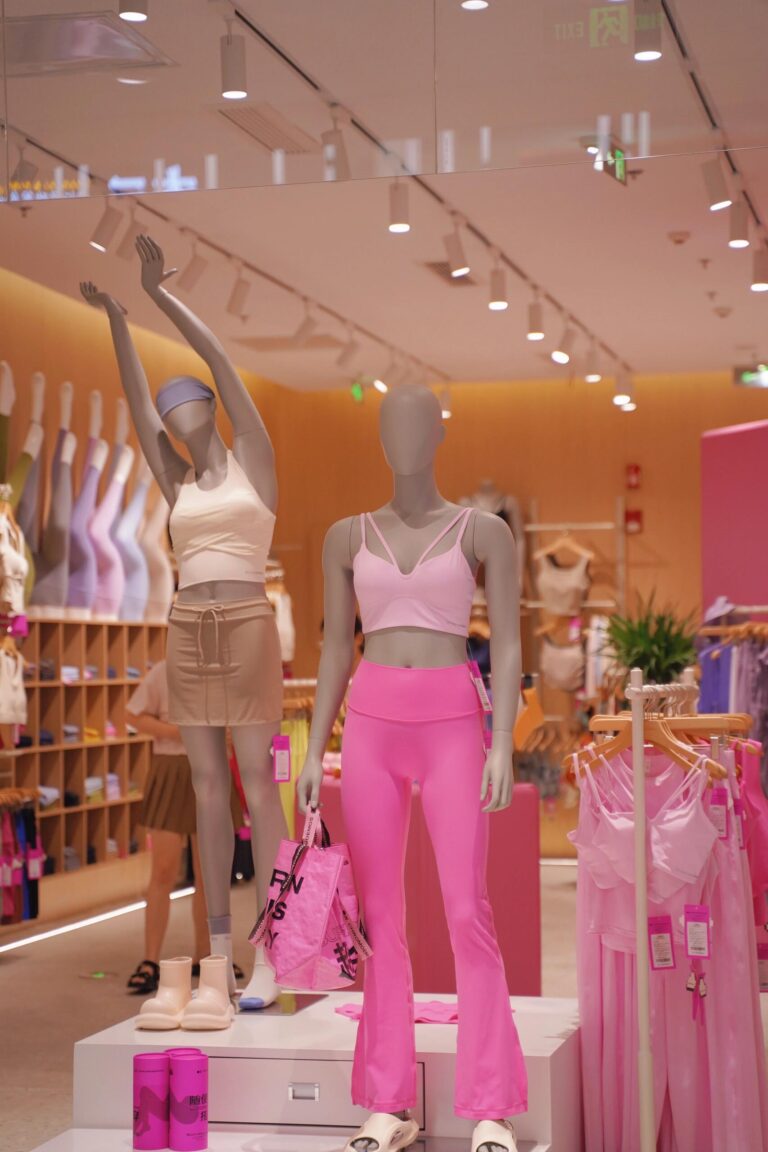
Opening a clothing store requires a pricing device, scanner gun, ticket printer, card reader, computer, cashier desk, and other hardware equipment, as well as software related to operating the pricing device and card reader.
The most important equipment for opening a clothing store includes an iron, hangers, price tags, pricing machine, customer resting sofa, and small accessories in the fitting room.
First, find a good store location, prepare the inventory, then proceed with decoration, how to decorate depends on your products, style, grade, all based on your products, how to display your products is also very important, after the entire store is decorated arrange your products and start business.
Hardware Facilities:
- Products
- Shelves
- Hangers
- Interior decoration
- Lighting
- Cashier desk
- Mannequins
Steps:
- Decorate the store
- Purchase shelves, hangers, mannequins
- Stock up
- Arrange products
Conclusion: Summarizing Key Learnings
The journey through the sportswear manufacturing industry is filled with both opportunities and obstacles. Through Aprilluck’s experiences, we’ve gleaned crucial insights into circumventing the pitfalls that many brands face. Key among these lessons is the vital role of in-depth market research, the importance of having a crystal-clear brand strategy, and the undeniable value of engaging with professionals for design, development, and production processes.
Aprilluck’s mission to illuminate the path for both budding and seasoned brands in this competitive landscape underscores the essence of perseverance, strategic foresight, and the continuous quest for knowledge. The voyage of building a successful sportswear brand may be complex, yet it’s achievable with the right approach, mindset, and resources. In summary, success in the sportswear manufacturing sector demands more than just passion; it requires a well-thought-out strategy, adaptability, and a collaborative spirit.